
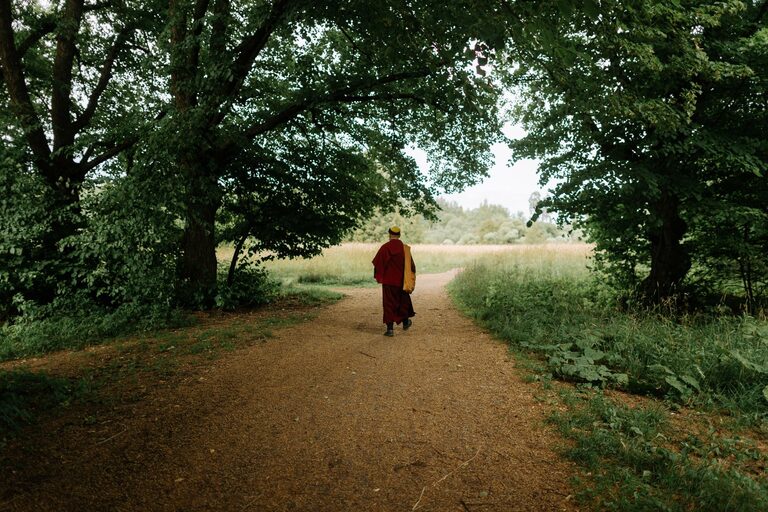
What Is Mindful Walking?
Mindful walking is the practice of paying close attention to the experience of walking. Instead of moving on autopilot while thinking about your schedule, you notice your body, surroundings, breathing, and thoughts as you move.
You do not need special equipment, a quiet retreat, or a long block of free time. Mindful walking can take place in a park, on a sidewalk, around your home, or during part of your usual daily walk. The goal is not to walk perfectly or empty your mind. It is simply to return your attention to the present moment.
This practice can make an ordinary walk feel more intentional and refreshing. It may also help you create a useful pause between busy parts of your day.
Why Try Mindful Walking?
Many people spend much of the day rushing from one task to another. A mindful walk offers a chance to slow down and notice what is happening right now.
Possible benefits include:
– Greater awareness of your body and surroundings
– A break from screens and busy thoughts
– More appreciation for ordinary moments
– A simple way to practice focus
– A calmer transition between activities
– A stronger connection with outdoor spaces
Mindful walking is not a test of concentration. Your attention will wander, especially when you are beginning. Each time you notice that your mind has drifted and gently return to the walk, you are practicing mindfulness.
How to Prepare for a Mindful Walk
A little preparation can make the experience easier and more enjoyable.
Choose a Simple Route
Select a route that feels comfortable and safe. You might walk:
– Around your neighborhood
– Through a nearby park
– Along a quiet path
– In a garden
– Around your workplace or home
For your first few walks, choose a familiar route with minimal distractions. Once you are comfortable, you can explore different locations and notice how each setting affects your attention.
Set Aside a Short Amount of Time
You do not need to plan a long walk. Start with five to ten minutes. A short, regular practice is often easier to maintain than an ambitious plan.
You can also add mindful walking to something you already do, such as walking to a store, taking a lunch break, or moving between errands. Even a few mindful minutes can give your routine a more deliberate rhythm.
Put Away Unnecessary Distractions
If possible, silence notifications and keep your phone stored safely. You do not have to remove every distraction, but reducing interruptions can help you stay present.
Wear comfortable shoes and clothing suitable for the weather. If you are walking outdoors, pay attention to traffic, uneven surfaces, weather conditions, and other practical safety concerns.
A Step-by-Step Mindful Walking Practice
Follow these steps to begin.
1. Pause Before You Start
Stand still for a moment. Notice your posture and how your feet connect with the ground. Take one or two comfortable breaths without trying to change your breathing.
Look around and acknowledge where you are. You might silently say, “I am here, and I am about to walk.”
2. Begin at a Natural Pace
Start walking at a comfortable speed. There is no need to walk unusually slowly unless that helps you pay attention. Mindful walking is possible at a regular pace.
Notice the movement of your body. Feel one foot lift, move forward, and touch the ground. Then notice the other foot. You do not need to describe every movement in detail. Simply sense the steady pattern of walking.
3. Notice Physical Sensations
Bring your attention to the body. You may notice:
– The pressure of your feet against the ground
– The movement of your ankles and knees
– The swing of your arms
– The position of your shoulders
– The temperature of the air on your skin
– The rhythm of your steps
Try to observe these sensations without judging them. If your feet feel heavy or your shoulders feel tense, simply acknowledge what you notice.
4. Use Your Senses
Expand your attention to the environment. Notice colors, shapes, light, and movement. Listen for nearby and distant sounds. Feel the air, and notice any scents that are present.
You might hear birds, traffic, footsteps, or leaves moving in the wind. You might see changing shadows, buildings, trees, or passing clouds. There is no need to name everything. Let the experience come and go naturally.
5. Include Your Breathing
After spending some time noticing your steps, bring gentle attention to your breathing. Notice whether your breath feels deep or shallow, smooth or uneven.
Do not force your breathing into a particular pattern. Let it remain natural while you continue walking. You can use the breath as an occasional point of focus, returning to it whenever your thoughts become busy.
6. Notice Thoughts Without Following Them
Thoughts will appear during your walk. You may think about work, conversations, plans, or unfinished tasks. This is normal.
When you notice that your mind has wandered, silently label it in a simple way, such as “thinking” or “planning.” Then return your attention to your steps, breathing, or surroundings.
The aim is not to stop thinking. The aim is to notice thoughts without letting them lead your attention for the entire walk.
7. Finish With a Brief Pause
At the end of your walk, stop for a moment. Notice how you feel compared with when you started. You may feel more alert, relaxed, energized, or simply aware of the space around you.
There is no required result. Take one final breath, look around, and then continue with your day.
Beginner-Friendly Ways to Practice
A mindful walk does not always need to be a separate activity. Try adding short moments of awareness to familiar routines.
Practice for Five Minutes
Walk for five minutes while focusing mainly on the feeling of your feet touching the ground. When your attention wanders, return to the next step.
Try a Sensory Walk
Choose one sense at a time. Spend a minute noticing sounds, then a minute noticing sights, followed by physical sensations and scents.
Use a Walking Reminder
Place a note near your door, desk, or car that says “Notice your next step.” This can remind you to pause during an ordinary journey.
Walk Without Measuring Performance
Avoid turning mindful walking into a fitness challenge. You do not need to track distance, speed, or calories. Let awareness, rather than performance, guide the walk.
Common Challenges and Helpful Responses
“My Mind Will Not Slow Down”
A busy mind is not a failure. Notice the activity in your thoughts, then return to a physical sensation, such as the feeling of your feet on the ground.
“I Feel Self-Conscious”
It may feel unusual to pay close attention while walking. Remember that you can practice quietly and naturally. You do not need to make visible changes to your pace or posture.
“I Do Not Have Much Time”
Use a short section of a normal walk. One mindful minute between tasks is enough to begin building the habit.
“The Environment Is Noisy”
Mindfulness does not require silence. Instead of resisting sounds, notice them as part of the current setting. You can also choose a quieter route when that is practical.
Making Mindful Walking a Habit
Start with a realistic schedule. For example, practice for five minutes three times a week. Connect the practice to an existing routine, such as walking after breakfast or taking a short break in the afternoon.
Keep your expectations simple. Some walks may feel focused, while others may feel distracted or rushed. Both experiences are part of learning. The important step is returning to awareness whenever you remember.
Over time, mindful walking can become a practical way to add more attention and appreciation to everyday movement. Begin with one step, notice where you are, and allow the walk to unfold at a comfortable pace.