
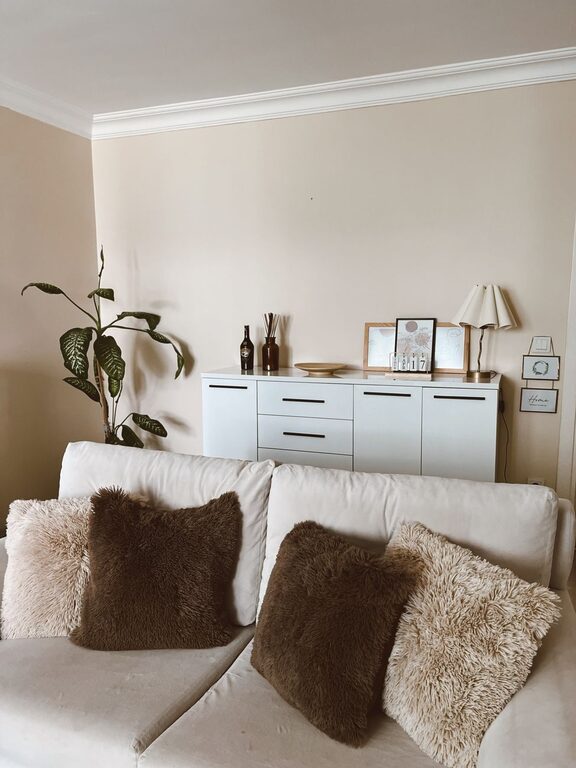
A living room refresh does not have to involve expensive furniture or a complete redesign. Small, thoughtful changes can make the space feel brighter, more comfortable, and more personal. By working with what you already have and focusing on a few high-impact details, you can create a noticeable transformation on a modest budget.
Start With a Fresh Layout
Before buying anything, try rearranging your existing furniture. A new layout can change how the room feels and functions.
Move the sofa away from the wall, angle a chair toward the seating area, or create a clearer path through the room. If the space feels crowded, remove one or two pieces that are rarely used. A simpler arrangement can make the room appear larger and more inviting.
Consider these layout ideas:
– Place seating around a central conversation area.
– Keep walkways open and easy to follow.
– Position furniture to take advantage of natural light.
– Move a side table or lamp to an underused corner.
– Create a small reading or work area with a chair and table.
Take a few photos of the room from different angles before and after rearranging. This can help you compare the changes and decide which layout works best.
Declutter and Restyle What You Own
Refreshing a room often begins with removing items rather than adding them. Clear surfaces, sort through decorations, and keep only the pieces you genuinely enjoy or use.
Group similar items together instead of spreading them throughout the room. For example, place books on one shelf, baskets in one storage area, and decorative objects on a single table. This creates a more organized appearance without requiring new storage furniture.
Try these simple steps:
- Remove everything from coffee tables, shelves, and cabinets.
- Wipe down the surfaces.
- Return only the items that are useful or meaningful.
- Arrange decorations in groups of different heights.
- Store or donate items that no longer suit the room.
You may discover that your current decor looks entirely different when it is displayed more intentionally.
Add Color With Textiles
Soft furnishings are among the easiest and most affordable ways to change the look of a living room. Cushion covers, throws, curtains, and area rugs can introduce color and texture without replacing large pieces.
If your room has neutral furniture, consider adding two or three accent colors. Choose shades that work well together, such as blue and cream, green and tan, or rust and gray. You do not need to match every item exactly. Repeating one color in several small details can create a balanced look.
For a budget-friendly update:
– Replace cushion covers instead of buying new pillows.
– Fold a colorful throw over the arm of a sofa.
– Layer a small rug over a larger neutral rug.
– Use lightweight curtains to make windows feel taller.
– Look for washable textiles that are practical for everyday use.
When choosing patterns, combine different scales. Pair a large pattern with a smaller print and a solid color to keep the arrangement from feeling too busy.
Create an Accent Wall
Paint can make a strong visual impact, especially when used on one wall instead of the entire room. An accent wall behind the sofa, television, or main seating area can add depth and character.
Choose a color that supports the existing furniture. A soft green, warm beige, muted blue, or earthy terracotta can add interest while remaining easy to live with. If you prefer a subtle change, use a slightly darker shade of the current wall color.
To keep costs low, calculate the amount of paint you need before shopping and check whether leftover paint from another project can be reused. Prepare the wall carefully, protect the floor, and use painter’s tape for clean edges.
If painting is not an option, consider removable wallpaper, framed fabric, or a gallery wall as an alternative focal point.
Improve the Lighting
Good lighting can make a living room feel warmer and more comfortable. You can improve the lighting scheme without replacing every fixture.
Use a combination of general, task, and accent lighting. A floor lamp can brighten a dark corner, while a table lamp can make a side table more useful in the evening. Small battery-powered lights can highlight shelves or artwork.
For an affordable lighting refresh:
– Replace harsh bulbs with warm white bulbs.
– Clean lampshades and light fixtures.
– Add a lamp to an empty corner.
– Use a mirror to reflect natural light.
– Place a small light near a reading chair.
Avoid relying on one bright ceiling light. Several softer light sources usually create a more welcoming atmosphere.
Bring in Plants and Natural Details
Plants can add color, texture, and energy to a living room. If you are new to plant care, begin with an easy-to-maintain variety or choose realistic artificial plants.
Place a plant in an empty corner, on a shelf, or beside a window. Use baskets, ceramic pots, or simple containers that complement the room. You can also bring in natural materials through wood trays, woven baskets, stone accessories, or linen fabrics.
A few natural details can make a room feel less formal and more comfortable without adding much expense.
Make Your Artwork Work Harder
You do not need expensive art to create an attractive display. Reframe prints you already own, make a simple arrangement from postcards, or print photographs in a consistent style.
Create a gallery wall by arranging frames on the floor first. Try different layouts until you find one that feels balanced. Use frames in the same color for a neat appearance, or mix styles for a more casual look.
Other affordable artwork ideas include:
– Framing pages from old calendars.
– Displaying a collection of small mirrors.
– Hanging a large piece of fabric as wall art.
– Creating simple abstract art with leftover paint.
– Enlarging a favorite personal photograph.
Keep the display at a comfortable viewing height, with the center of the arrangement close to eye level.
Refresh Small Furniture Pieces
Instead of replacing a coffee table or side table, give it a simple update. Clean the surface, tighten loose hardware, and consider painting or staining the piece.
Changing cabinet handles or drawer pulls can also make older furniture look more current. Look for affordable hardware in a finish that repeats other details in the room, such as black, brass, or silver.
If a table has a plain surface, add a tray with a book, candle, and small decorative object. A tray keeps items organized and makes the arrangement easy to move when you need more table space.
Use Smart Storage
A tidy living room often feels refreshed even when the decor has not changed much. Use baskets, boxes, and storage ottomans to keep everyday items organized.
Choose storage that fits the room’s style. Woven baskets can add warmth, while fabric bins offer a softer appearance. Store blankets, remote controls, toys, and magazines in designated places so they are easy to put away.
If you have open shelving, leave some spaces empty. A combination of books, decorations, and open areas will look more relaxed than shelves filled from end to end.
Finish With Personal Details
The best living rooms reflect the people who use them. Add a few personal touches, such as travel souvenirs, family photographs, favorite books, or handmade items.
Avoid trying to copy a complete room from a catalog. Instead, use inspiration photos to identify elements you like, such as a color combination, furniture arrangement, or lighting style. Then adapt those ideas to your own space and budget.
A successful refresh may be as simple as a better layout, cleaner surfaces, softer lighting, and a few carefully chosen accents. Make changes gradually, live with each update, and focus on creating a room that feels comfortable, useful, and welcoming.